
Why Scaling Technology Companies Need an IP Strategy
Oct 21, 2026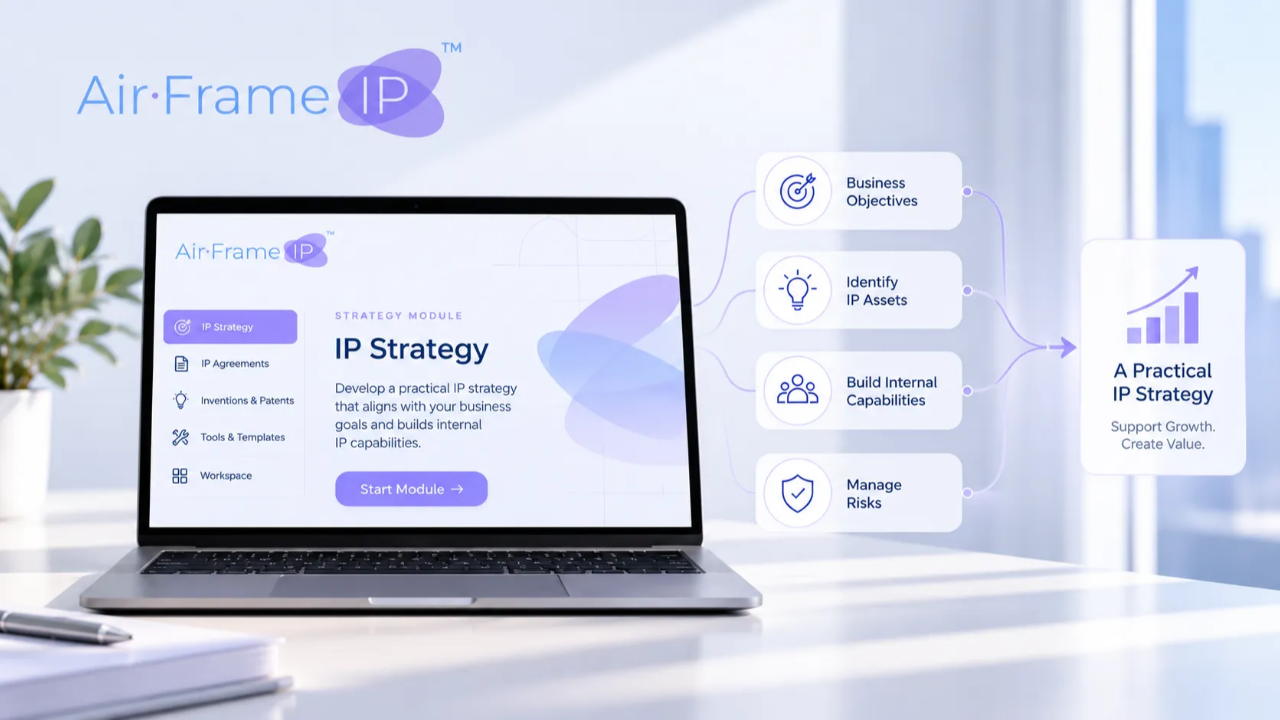
For technology companies, intellectual property (IP) is often among their most valuable business assets. Yet, as companies grow, their approach to managing IP does not always evolve at the same pace.
In the early stages, IP decisions may be made in response to immediate needs: filing a patent application, signing a confidentiality agreement or addressing an ownership question. While these activities are important, they do not necessarily amount to an IP strategy.
As technology companies scale, they need a more deliberate approach to identifying, protecting, managing and leveraging their intellectual property.
An effective IP strategy connects IP decisions to broader business objectives and helps ensure that valuable innovations, knowledge and other intangible assets support the company’s long-term growth.
1. Aligning IP with Business Objectives
An IP strategy should begin with an understanding of the company’s business strategy.
What technologies, products or capabilities differentiate the company from its competitors? Where does the company expect to generate future revenue? Which innovations are essential to maintaining its competitive advantage?
The answers to these questions should inform how the company prioritizes its IP activities and resources.
For example, a company developing a proprietary manufacturing process may benefit from maintaining certain technical information as trade secrets rather than pursuing patent protection. Another company seeking to license its technology may place greater emphasis on building a patent portfolio that supports its commercialization model.
The objective is not simply to accumulate IP rights, but to develop and manage IP assets that support the company’s commercial goals.
2. Identifying and Managing Valuable IP Assets
IP extends well beyond patents.
Scaling technology companies may develop significant value through software, algorithms, technical know-how, proprietary processes, data, designs, trademarks and confidential business information.
However, these assets are not always systematically identified, documented or managed.
As companies expand their teams, introduce new products and enter additional markets, valuable IP can become dispersed across departments, employees and external collaborators.
Establishing processes to identify and document IP assets helps companies better understand what they own, what they use and what requires protection.
This may involve maintaining an IP inventory, documenting technical developments, tracking ownership and establishing procedures for handling confidential information.
These activities also provide a foundation for making more informed decisions about IP protection, commercialization and risk management.
3. Building Internal IP Processes and Capabilities
As a technology company grows, responsibility for IP can no longer rest solely with its founders or external legal advisors.
Employees across research and development, engineering, product development, business development and management may all contribute to the creation, disclosure, protection or commercialization of IP.
Building internal IP capabilities means ensuring that these individuals understand their roles and have access to practical processes and resources.
For example, companies can establish procedures for:
Identifying and documenting potentially valuable inventions.
Reviewing innovations before public disclosure.
Managing confidential information and trade secrets.
Confirming IP ownership with employees, contractors and collaborators.
Evaluating IP considerations before entering commercial agreements.
These processes need not be overly complicated. The goal is to establish practical, repeatable approaches that become part of normal business operations.
IP management is most effective when it is integrated into how a company operates, rather than treated solely as a legal issue requiring attention when a problem arises.
4. Managing IP Risks as the Business Scales
Growth creates opportunities, but it also introduces new IP risks.
Scaling companies frequently engage additional employees, contractors, suppliers, research institutions, customers and commercial partners. Each relationship may involve the exchange, creation or use of intellectual property.
Without appropriate agreements and internal processes, companies may encounter uncertainty regarding ownership, confidentiality, permitted uses of technology or rights to future developments.
For example, a technology company collaborating with a third party on product development should understand not only who owns the IP each party brings into the relationship, but also how newly developed IP will be owned and used.
Similarly, engaging external developers without clearly addressing IP ownership can create complications when a company seeks investment, enters a licensing arrangement or prepares for acquisition.
A proactive IP strategy helps companies identify these issues early and address them before they become more difficult or costly to resolve.
5. Supporting Investment, Partnerships and Commercialization
As technology companies pursue financing, strategic partnerships, licensing opportunities or acquisitions, their IP assets and management practices may become subject to increased scrutiny.
Investors and commercial partners may want to understand what IP the company owns or controls, whether it has appropriate rights to use its technology, how its IP is protected and whether material ownership or contractual risks exist.
Companies that maintain clear IP records, appropriate agreements and established management processes are generally better positioned to respond to these inquiries.
An IP strategy can also help companies evaluate opportunities to generate commercial value through licensing, partnerships, market expansion or other business arrangements.
Rather than viewing IP protection as an isolated expense, companies can consider how IP assets contribute to their broader commercial strategy.
Moving from Reactive to Strategic IP Management
For scaling technology companies, developing an IP strategy is not necessarily about filing more patents, registering more trademarks or increasing legal spending.
It is about understanding which intellectual property matters to the business, making informed decisions about how to manage it and establishing the internal capabilities needed to support those decisions.
An effective IP strategy should evolve alongside the company, reflecting changes in its technologies, markets, commercial relationships and business objectives.
By taking a structured and proactive approach, technology companies can strengthen their ability to manage IP risks, protect competitive advantages and support long-term growth.
Building Internal IP Capabilities with AirFrameIP
AirFrameIP helps startups and scaling technology companies develop the knowledge, processes and practical capabilities needed to take a more active role in managing their intellectual property.
Through structured online learning, practical activities, tools and resources, AirFrameIP supports companies in understanding their IP, developing IP strategies and integrating IP management into their business operations.
Access AirFrameIP’s IP Strategy Module.
Stay connected with news and updates!
Join our mailing list to receive the latest news and updates from our team.
Don't worry, your information will not be shared.
We hate SPAM. We will never sell your information, for any reason.
